History of the Pyramids of Giza

Get ready to explore the history of ancient Egyptian architecture through the Pyramids of Giza. Built about 4,500 years ago, these structures are from the Old Kingdom era.

The biggest pyramid is an amazing 481 feet tall. It’s made of 2.3 million stone blocks. Its creation shows the ancient Egyptians’ cleverness and still amazes people everywhere.

You will read in this article

Overview of the Pyramids of Giza

Exploring the Pyramids of Giza is like entering a world of ancient wonder. These pyramids, near modern-day Cairo, are a top archaeological site. They are full of mystery and fascination.

The Pyramids were built as grand tombs for the Pharaohs of Egypt. They believed these rulers would become gods after death. This belief was key to their religion and culture, leading to the creation of these massive structures.

The Great Pyramid of Khufu, built around 2550 B.C., is the largest and most impressive. It shows the ancient Egyptians' ingenuity and skill. They built such a huge and precise structure with ancient technology.

The Pyramids are not just big; they also show great engineering and architecture skills. The ancient Egyptians' construction methods are still studied and debated today.

Some key features of the Pyramids include:

  • Their precise alignment with celestial bodies, showing the ancient Egyptians' advanced astronomy knowledge.
  • The massive scale of the pyramids, with the Great Pyramid being one of the largest ancient structures.
  • The intricate internal chamber designs, believed to help the Pharaohs ascend to the afterlife.

Visiting the Pyramids of Giza gives a unique look into ancient Egyptian culture. You'll learn about their religious and funerary practices. Exploring the site helps you understand the historical context and the Pyramids' role in ancient society.

The Builders Behind the Pyramids

Ever wonder who built the Pyramids of Giza? These ancient Egyptian wonders were created by a huge team of skilled workers. They included masons, engineers, and architects.

Building the pyramids needed a lot of people. It's thought that 20,000 to 100,000 workers were involved. These workers were not slaves but were paid for their hard work.

The Labor Force

The team building the pyramids was very diverse. It included:

  • Skilled craftsmen, such as masons and carpenters
  • Engineers and architects who designed the pyramids
  • Farmers and laborers who helped with the construction

This shows how advanced the ancient Egyptians were in managing their workforce.

Worker Category Estimated Numbers Roles
Skilled Craftsmen 5,000 - 10,000 Masons, carpenters, and other skilled trades
Engineers and Architects 1,000 - 2,000 Design and planning of the pyramids
Farmers and Laborers 14,000 - 88,000 Construction and manual labor

The Pyramids of Giza show the genius of ancient Egyptian architects and workers. Learning about the people who built them gives us a glimpse into their society. It shows how advanced they were.

The Purpose of the Pyramids

The Pyramids of Giza were built with a deep purpose. They served as grand tombs for the Pharaohs. These tombs were meant to provide the Pharaohs with everything they needed for their journey into the afterlife.

The ancient Egyptians thought the pyramids were key to the Pharaohs' successful transition into the afterlife. The tombs were filled with treasures and provisions. The Great Sphinx, near the pyramids, was built during Pharaoh Khafre's reign. This shows the complex's importance.

Ensuring a Smooth Transition to the Afterlife

The pyramids had intricate chambers and passageways. Each part had a specific role in the Pharaoh's journey. The layout and texts on the walls were meant to guide the Pharaoh through the afterlife.

The construction of the pyramids and the Sphinx shows the ancient Egyptians' advanced understanding and beliefs. Their tombs were not just grand structures. They were built to help the Pharaohs transition smoothly into the afterlife, with all they needed and protective measures.

Construction Methods of the Pyramids

The Pyramids of Giza show the ancient civilization's ingenuity. They were built with advanced methods. The ancient Egyptians were skilled engineers who found creative solutions to their challenges.

Recently, a lost branch of the Nile River was found to be used in building the pyramids. Studies show it helped move the huge stone blocks. This method made moving blocks easier, showing the ancient Egyptians' cleverness.

Some key methods used by the ancient Egyptians include:

  • They used tools made from copper and stone.
  • They had a large team of skilled workers.
  • They developed ways to move and place big stone blocks.
  • They used the Nile River and other waterways to move materials.

The Pyramids of Giza show the ancient Egyptians' advanced engineering skills. As aUNESCO World Heritage Site, they still amaze people today. Visitors from all over come to see them.

Here are some interesting facts about the Pyramids:

  1. The Great Pyramid of Giza took 20 to 30 years to build.
  2. It was over 481 feet tall, one of the tallest ancient structures.
  3. Building it needed thousands of workers, including masons and engineers.

The Pyramids of Giza are a remarkable achievement in construction and engineering. They show what the ancient civilization could do.

The Great Pyramid of Khufu

The Great Pyramid of Khufu is truly awe-inspiring. It's one of the Seven Wonders of the Ancient World. Built around 2550 B.C., it's the largest pyramid at Giza, towering at 481 feet high.

A Marvel of Ancient Engineering, it's made of 2.3 million stone blocks. This shows the advanced skills of the ancient Egyptians. Exploring the pyramid, you'll see its historical importance and architectural beauty.

The pyramid's construction is amazing, given the technology and resources back then. Its precision and scale show ancient Egypt's power and sophistication.

  • The Great Pyramid of Khufu is an iconic symbol of ancient Egypt.
  • It is the largest pyramid at Giza, showcasing the engineering prowess of the ancient Egyptians.
  • The pyramid's construction around 2550 B.C. marks it as a significant historical landmark.

Visiting the Great Pyramid of Khufu is like stepping back in time. It gives us a glimpse into ancient Egypt's culture, beliefs, and achievements. As part of the History of the Pyramids of Giza, it honors the ingenuity and skill of its builders.

The Pyramid Complex at Giza

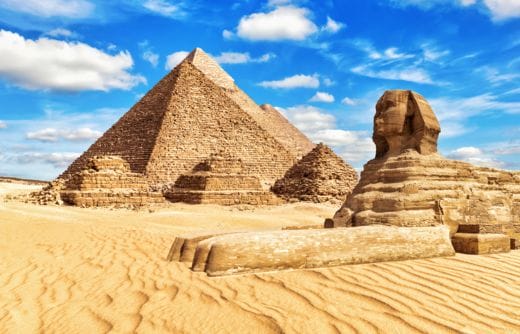
Exploring the Pyramid Complex at Giza reveals the rich history and architectural wonders of ancient Egypt. This vast site includes the three pyramids, the Great Sphinx, and other tombs and temples.

The Pyramid Complex sheds light on ancient Egyptians' funerary practices and beliefs. It showcases the Pharaohs' advanced engineering and architectural skills.

The Pyramid Complex at Giza features several important structures:

  • The three pyramids, each built for a different Pharaoh
  • The Great Sphinx, a mysterious and iconic monument
  • Various tombs and temples that served as burial sites and places of worship

These structures highlight the ancient Egyptians' architectural skill and their religious beliefs. The Great Sphinx, with its enigmatic smile, is a world-famous landmark.

Key Features of the Pyramid Complex

The Pyramid Complex at Giza is known for its impressive scale and detailed design. Key features include:

  1. The precise construction of the pyramids, showcasing the advanced engineering skills of the ancient Egyptians
  2. The symbolic significance of the Great Sphinx, representing the power and wisdom of the Pharaohs
  3. The elaborate tombs and temples, which highlight the complex funerary practices of the ancient Egyptians

By studying the Pyramid Complex at Giza, you can understand ancient Egypt's cultural, religious, and architectural achievements. This site is a fascinating archaeological location, attracting visitors and scholars worldwide.

Preservation Efforts Over Time

Keeping the Pyramids of Giza safe from damage is a big task. It needs help from all over the world and new ideas. These ancient structures are among the most important archaeological wonders. They have faced many dangers, like natural disasters, pollution, and too many tourists.

Many groups work together to save the Pyramids of Giza. This includes local teams, international groups, and people everywhere. They want to keep the pyramids and the land around them safe. They also aim to protect the ancient mysteries these sites hold.

Some important steps to protect the pyramids include:

  • Regular maintenance and restoration to keep the pyramids strong
  • Controlling tourism to prevent damage from too many visitors
  • Actions to protect the environment and fight climate change
  • Studies and records to learn more about the pyramids and their history

Working together, we can keep the Pyramids of Giza safe for the future. Learning about these efforts shows us that saving our cultural treasures is a job for everyone. It takes hard work and teamwork from around the world.

Modern Discoveries and Research

Research is slowly uncovering the secrets of the Pyramids of Giza. This is revealing new insights into ancient Egyptian life. You're about to learn about the latest findings that are changing how we see these ancient wonders.

A recent find is a hidden void in the Great Pyramid of Khufu. This void was found using advanced scans, sparking debate about its purpose. It has caught the public's attention and opened new research paths into the pyramid's construction and history.

Research is still uncovering the Sphinx's role in the pyramid complex. Some studies suggest it was built during the Old Kingdom period. But its exact date and purpose are still debated.

Recent Findings and Their Implications

Modern tech like 3D scanning and thermal imaging has changed how we study the Pyramids. These tools have let researchers map the pyramids' interiors in great detail. They've found features that were unknown before.

Discovery Description Significance
Hidden Void in the Great Pyramid Detected through advanced scanning techniques Sparks debate on its purpose and significance
Sphinx Construction Period Believed to be from the Old Kingdom period Provides insights into the historical context of the Sphinx
Internal Structure Mapping Utilizes 3D scanning and thermal imaging Reveals previously unknown features of the pyramids

The study of the Pyramids of Giza is still exciting people all over the world. It gives us a peek into the lives of an ancient civilization. As we make new discoveries, our understanding of these incredible structures grows.

Visiting the Pyramids of Giza

Planning your visit to the Pyramids of Giza is exciting. You're about to see one of the world's most amazing archaeological sites. The Pyramids of Giza, a UNESCO World Heritage Site, draws millions yearly. Here, you can see the pyramids, the Great Sphinx, and more, learning about their history and importance.

As you walk through the pyramid complex, you'll feel the History of the Pyramids of Giza all around. It's a chance to see how ancient Egyptians lived and the role these structures played in their culture. Whether you love archaeology or just want a unique adventure, the Pyramids of Giza are a must-see.

The Pyramids of Giza are not just impressive; they're also deeply meaningful. You can join a guided tour, visit the solar boat museum, or just enjoy the views. Seeing the pyramids and the landscape around them is an experience you won't forget.

Search

Categories

blog
22
Plan with us! Your dream vacation is a click away.
Related Tours

Sightseeing

Join us for an extraordinary day trip from Marsa Alam to Luxor, where ancient history c...

Sightseeing

Your adventure begins as our representative meets you at your Marsa Alam hotel and acco...

Private

Embark on an unforgettable 8-day Egyptian adventure beginning with a warm welcome in Ca...