Luxor Temple: A Closer Look
When you enter Luxor Temple, you feel like you've traveled back in time. This amazing place is on the east bank of the Nile River. It shows the skill and spiritual depth of ancient Egyptians.
The history of Luxor Temple is both interesting and complex. It started in the 14th century BC during Pharaoh Amenhotep III's rule. It was mainly for the god Amun, his wife Mut, and their son Khonsu. Over time, it changed a lot, with new parts added by different rulers.
The Architectural Significance of Luxor Temple
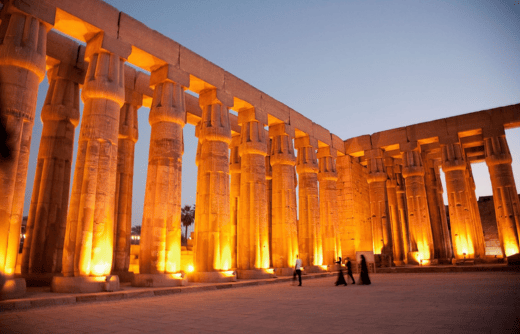
The design of Luxor Temple is impressive. It has a big entrance, tall columns, and detailed hieroglyphics. The temple shows the beliefs and politics of the time. It has areas for different gods and pharaohs.
The Avenue of Sphinxes is a highlight. It used to link Luxor Temple to Karnak Temple Complex. The temple's layout shows the ancient Egyptians' engineering skills. It's aligned with the winter solstice sunrise, showing their knowledge of astronomy.
Key Features of Luxor Temple
- The grand pylon entrance, adorned with scenes of military victories and religious rituals.
- The hypostyle hall, with its towering columns that create a dramatic effect.
- The inner sanctum, where the sacred barque of Amun was kept during rituals.
- The Roman chapel, showcasing the influence of Roman culture on Egyptian religious practices.
Visiting Luxor Temple gives you a special look at ancient Egypt's culture and architecture. As you walk through, you're not just seeing history. You're experiencing the lasting legacy of a civilization that still fascinates us today.